If you’ve been dialing in your nutrition – buying high-quality ingredients, focusing on whole foods, maybe even adding in fermented foods for gut health – but still don’t feel quite right, you’re not alone. We often see patients who are doing all the “right” things and yet are dealing with symptoms like brain fog, headaches, sinus congestion, skin changes, that wired-but-tired feeling that doesn’t quite make sense, or a subtle sense of inflammation that comes and goes. What’s especially frustrating is that it doesn’t follow a clear pattern. A meal that felt great one day suddenly doesn’t the next. In cases like this, it’s worth considering whether histamine sensitivity could be playing a role.
Understanding Histamine Sensitivity
Histamine is a natural compound your body makes. It helps with immune responses, digestion, and even brain signaling. It’s also the same chemical involved in allergic reactions. The catch though, is that histamine is also found in certain foods.
Normally, your body breaks it down efficiently. But when histamine builds up faster than your body can clear it – whether from food, stress, or underlying imbalances, you can start to notice symptoms.
Histamine sensitivity doesn’t look the same for everyone. Common patterns we see include:
- Headaches or migraines
- Nasal congestion, sinus pressure, or postnasal drip
- Flushing, redness, or feeling warm (especially in the face/neck)
- Hives, itching, or sensitive skin
- Digestive symptoms like bloating, nausea, or diarrhea
- Heart palpitations or a racing heart
- Anxiety, irritability, or that “wired but tired” feeling
- Trouble falling or staying asleep
- Dizziness or lightheadedness
- Fatigue or brain fog
- Menstrual-related symptoms or worsening symptoms around ovulation
One hallmark is that symptoms often feel inconsistent and hard to predict. They may flare with certain foods, alcohol, stress, poor sleep, hormonal shifts, or even seasonal allergies.

Common Food Triggers
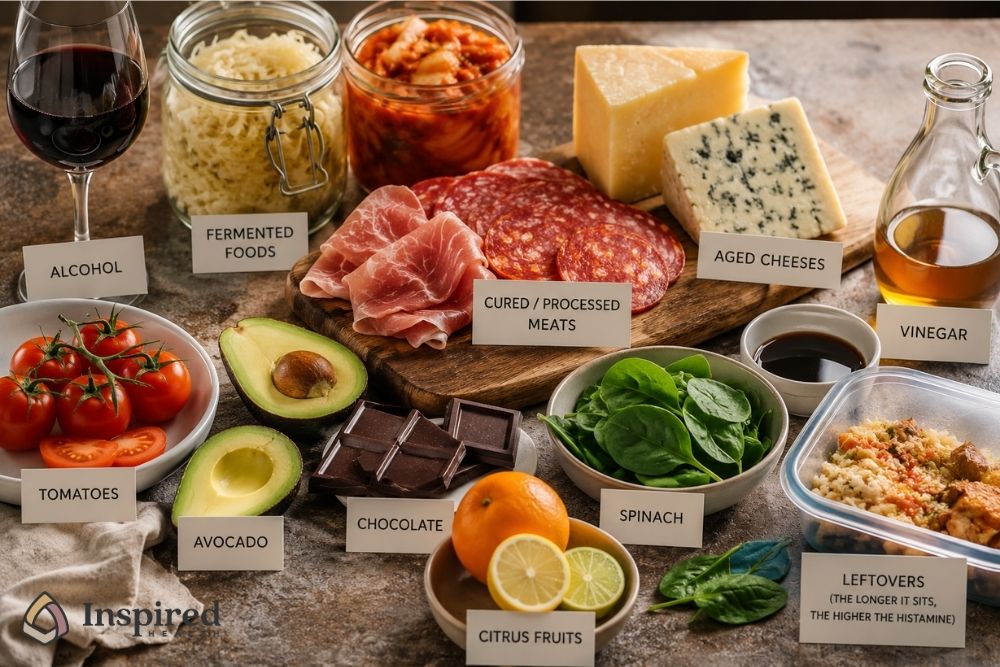
Histamine tends to be higher in foods that are aged, fermented, or not fresh. And interestingly, some foods that don’t have higher histamine content, can trigger histamine release in certain people. This doesn’t mean these foods are “bad.” It just means your body might need a different approach, at least temporarily.
Here are some of the most common foods we consider when exploring histamine sensitivity:
Higher histamine foods:
- Alcohol (especially wine and beer)
- Aged cheeses
- Cured or processed meats
- Fermented foods (sauerkraut, kimchi, kombucha)
- Vinegar and foods containing vinegar
- Leftovers (histamine increases the longer food sits)
Histamine-releasing foods (may trigger symptoms in some people):
- Tomatoes
- Avocado
- Spinach
- Citrus fruits
- Chocolate
Why Histamine Sensitivity Develops
There’s rarely just one reason. We often see histamine sensitivity show up alongside things like gut imbalances, stress, hormonal shifts, or ongoing inflammation. That’s why simply cutting out foods doesn’t always fix the problem – it’s more helpful to understand what’s driving the sensitivity in the first place.
A Quick Note About Mast Cells
You may have heard of Mast Cell Activation Syndrome (MCAS). While there can be overlap in symptoms, MCAS is a more complex and less common condition involving dysregulated immune cells. Most people with mild or moderate histamine-related symptoms do not have MCAS, but it’s something we keep in mind if symptoms are more severe or widespread.
Finding Relief Without Long-Term Restriction
If this sounds familiar, a short-term reset that focuses on fresh foods and reducing high-histamine triggers can be a helpful starting point while we look deeper at gut health, inflammation, and overall balance rather than relying on long-term restriction.
For some patients, targeted support can be helpful while we’re working on the bigger picture:
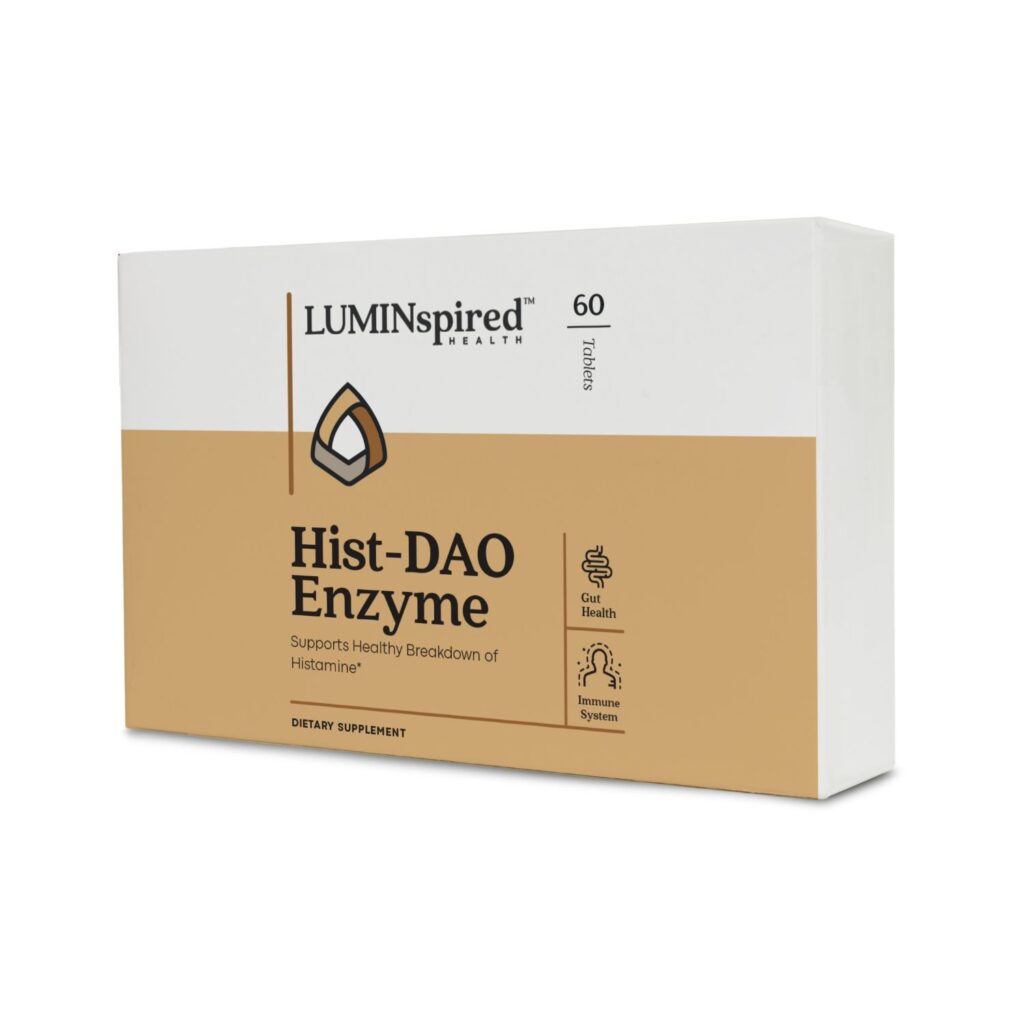
One option we often use is a Hist-DAO Enzyme (Dao stands for diamine oxidase). DAO is the primary enzyme responsible for breaking down histamine in the gut. Taken shortly before meals, it can help reduce the overall histamine “load” from food, especially in situations where you know you may be eating higher-histamine foods. Because DAO works locally in the digestive tract (rather than systemically), it’s best thought of as a tool for symptom support, not a long-term solution on its own.
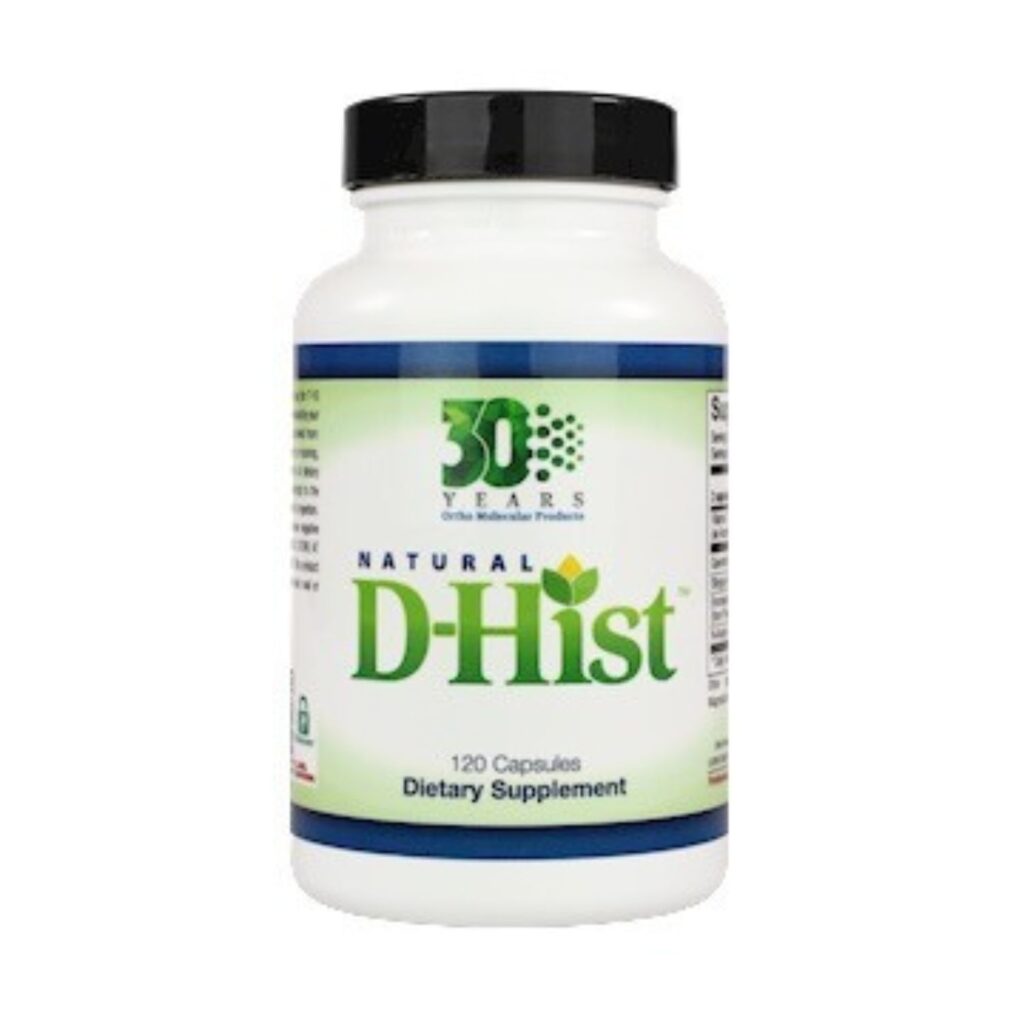
We also frequently use Natural D-Hist, which takes a different approach. Instead of breaking down histamine, D-Hist is designed to help modulate the body’s histamine response, using ingredients like quercetin, stinging nettle, and bromelain to support a more balanced immune reaction.
In practice, these can be helpful tools, either short-term during a flare or seasonally – but we always pair them with a deeper look at underlying drivers like gut health, inflammation, and overall immune balance as mentioned above.
If your body has been reacting in ways that feel unpredictable, this may be one piece of the puzzle and one we can explore together in a thoughtful, individualized way.

Want more Inspired tips?
Be sure to follow us on Instagram, Facebook, and Pinterest.
Also, sign up for our newsletter!
Visit us in-person at Inspired Health, or schedule a TeleHealth appointment!
References:
1.Hrubisko M, Danis R, Huorka M, Wawruch M. Histamine Intolerance-The More We Know the Less We Know. A Review. Nutrients. 2021 Jun 29;13(7):2228. doi: 10.3390/nu13072228. PMID: 34209583; PMCID: PMC8308327.
2.Jackson K, Busse W, Gálvez-Martín P, Terradillos A, Martínez-Puig D. Evidence for Dietary Management of Histamine Intolerance. Int J Mol Sci. 2025 Sep 20;26(18):9198. doi: 10.3390/ijms26189198. PMID: 41009760; PMCID: PMC12470264.
3.Rentzos G, Weisheit A, Ekerljung L, van Odijk J. Measurement of diamine oxidase (DAO) during low-histamine or ordinary diet in patients with histamine intolerance. Eur J Clin Nutr. 2024 Aug;78(8):726-731. doi: 10.1038/s41430-024-01448-2. Epub 2024 May 20. PMID: 38769188; PMCID: PMC11300302.
4.Schnedl WJ, Enko D. Histamine Intolerance Originates in the Gut. Nutrients. 2021 Apr 12;13(4):1262. doi: 10.3390/nu13041262. PMID: 33921522; PMCID: PMC8069563.