
If you’ve ever noticed that certain foods leave you feeling bloated, foggy, achy, congested, or exhausted, you’ve probably wondered whether you have a food allergy.
For many people, allergy testing comes back completely normal. They’re told everything looks fine, yet they still know something isn’t right.
This is where the conversation often gets confusing.
Food allergies and food sensitivities are frequently lumped together, but they are actually very different processes happening within the immune system. Both involve an immune response, but they activate different arms of that system, produce different types of symptoms, and require different approaches when we’re trying to identify the culprit.
Neither should be dismissed. They’re simply different ways the immune system interacts with food, and understanding that distinction is the first step toward making sense of your symptoms.
Food Allergies: Fast, Obvious, and Potentially Dangerous
A true food allergy is driven primarily by a type of antibody called Immunoglobulin E (IgE). Think of IgE as your immune system’s emergency response team. When someone with an allergy eats a triggering food, IgE antibodies recognize that food almost immediately and trigger the release of chemicals like histamine from mast cells and basophils.
This is why allergic reactions tend to happen within minutes to a couple of hours after eating. Hives, swelling, wheezing, vomiting, difficulty breathing, and anaphylaxis are all classic examples of IgE-mediated reactions.
These reactions deserve immediate medical attention because they can become life-threatening very quickly. Fortunately, because they happen so rapidly, the connection between the food and the symptoms is often fairly obvious.

Food Sensitivities: A Slower, More Complex Immune Conversation
Food sensitivities are different.
Rather than involving IgE, they are often associated with Immunoglobulin G (IgG) antibodies and other aspects of the adaptive immune system. Instead of launching an immediate alarm, these immune pathways tend to create a slower, more gradual inflammatory response.
This is one of the reasons food sensitivities are so frustrating.
Symptoms may not appear for several hours or even days after eating a particular food. By then you’ve eaten several more meals, making it nearly impossible to connect the dots yourself.
Instead of a dramatic allergic reaction, people often experience symptoms that are much more subtle: persistent bloating, headaches, brain fog, fatigue, eczema, joint pain, sinus congestion, or digestive changes. None of these symptoms automatically mean someone has a food sensitivity, but they are the kinds of complaints we commonly see when immune reactivity to foods is part of the picture.

Why Are Food Sensitivities So Controversial?
This is where an important distinction gets lost.
Food sensitivities are sometimes dismissed because they don’t cause life-threatening reactions like food allergies do. The assumption becomes that if a reaction isn’t causing anaphylaxis, it must not be clinically meaningful.
In reality, that’s not a fair conclusion.
IgE isn’t the only antibody your immune system makes. Our immune system is incredibly sophisticated, with multiple branches designed to respond to different types of exposures. IgG antibodies are absolutely a legitimate part of normal immune function.Where the controversy lies is not whether IgG exists – of course it does – but rather how we interpret elevated IgG antibodies to foods.
Some IgG antibodies simply reflect that you’ve eaten a food. Others may represent a more meaningful immune response contributing to inflammation in susceptible individuals. The challenge is distinguishing between the two. That’s why food sensitivity testing should never be interpreted in isolation or treated as a definitive list of foods you’ll never eat again.
The Missing Piece: Gut Barrier Health
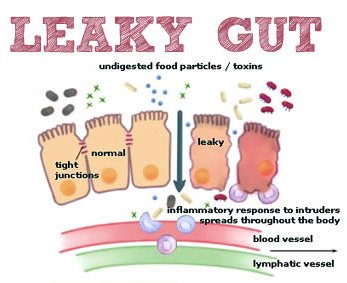
One of the concepts we spend a lot of time discussing in functional medicine is intestinal permeability, often referred to as “leaky gut.”
Your intestinal lining is designed to be incredibly selective. It allows nutrients to pass into the bloodstream while keeping larger food proteins, bacteria, and other unwanted substances inside the digestive tract.
When that barrier becomes compromised, larger food particles may gain increased access to the immune system. The immune system does exactly what it’s supposed to do – it notices them and begins producing antibodies.
In some cases, this means a food sensitivity panel may light up with numerous positive foods, when the underlying problem isn’t actually that someone has suddenly become “allergic” to twenty different foods. Instead, the immune system is reacting because the intestinal barrier has become more permeable.
From a functional medicine perspective, that changes the conversation entirely.
Rather than asking, “Which foods do we need to avoid forever?” we’re asking, “Why has the immune system become reactive in the first place?”
Supporting gut barrier integrity, calming inflammation, improving digestion, and addressing underlying contributors are often just as important as temporarily removing reactive foods.
Why We Use Cyrex Testing
Not all food sensitivity tests are created equal, which is one reason this topic has become so polarizing.
At our clinic, we use the Cyrex Array 3 and Array 4 panels because they were developed to address several limitations of traditional food sensitivity testing. Their methodology is designed to improve antigen specificity and provide a more clinically meaningful picture of immune reactivity. While no laboratory test is perfect, we have found these panels to be a valuable tool when interpreted alongside a patient’s symptoms, history, and overall clinical presentation.
Rather than simply measuring IgG antibodies against whole foods, Cyrex evaluates immune reactivity using carefully characterized food antigens and incorporates methods intended to reduce nonspecific binding that can contribute to false-positive results. The panels also examine different forms of certain foods – including cooked and raw preparations and specific protein fractions – because the immune system doesn’t necessarily recognize every preparation of a food in the same way.
Perhaps most importantly, Cyrex acknowledges that intestinal permeability can influence immune reactivity. Their testing strategy was developed with that complexity in mind, allowing us to interpret results with much greater confidence than many commercially available panels.
Even then, we don’t treat a lab result – we treat a person.
Testing is one piece of the puzzle. We combine those results with your symptoms, your digestive health, your medical history, and your overall clinical picture before making recommendations.
The Goal Isn’t a Smaller Diet
One of our biggest concerns with food sensitivity testing is that it can leave people afraid of food.
We’ve met patients carrying around lists of thirty or forty foods they’ve been told never to eat again. They’re exhausted, overwhelmed, and eating an increasingly restrictive diet. That isn’t the goal!
Unlike a true IgE-mediated allergy, many food sensitivities are dynamic. As the gut heals, inflammation decreases, and the immune system becomes more regulated, many people are able to successfully reintroduce foods that previously caused symptoms.
The ultimate goal isn’t lifelong avoidance. It’s restoring resilience.
Because at the end of the day, the healthiest immune system isn’t one that reacts to everything – it is one that knows when not to react.

Digestive enzymes don’t “cure” food sensitivities or prevent an immune response entirely, but they may help break down proteins more efficiently before they interact with the gut. If you’ve already identified a gluten and/or dairy sensitivity, it may be helpful to keep this Gluten + Dairy Enzyme on hand for accidental exposures while you continue working with your provider on the bigger picture of gut and immune health.

Want more Inspired tips?
Be sure to follow us on Instagram, Facebook, and Pinterest.
Also, sign up for our newsletter!
Visit us in-person at Inspired Health, or schedule a TeleHealth appointment!
References
Gargano D, Appanna R, Santonicola A, et al. Food Allergy and Intolerance: A Narrative Review on Nutritional Concerns. Nutrients. 2021;13(5):1638.
Riggioni C, et al. Systematic review and meta-analyses on the accuracy of diagnostic tests for IgE-mediated food allergy. Allergy. 2024.
Poto R, et al. The Role of Gut Microbiota and Leaky Gut in the Pathogenesis of Food Allergy. 2023.
Vita AA, et al. Associations between food-specific IgG antibodies and intestinal permeability biomarkers in adults. 2022.