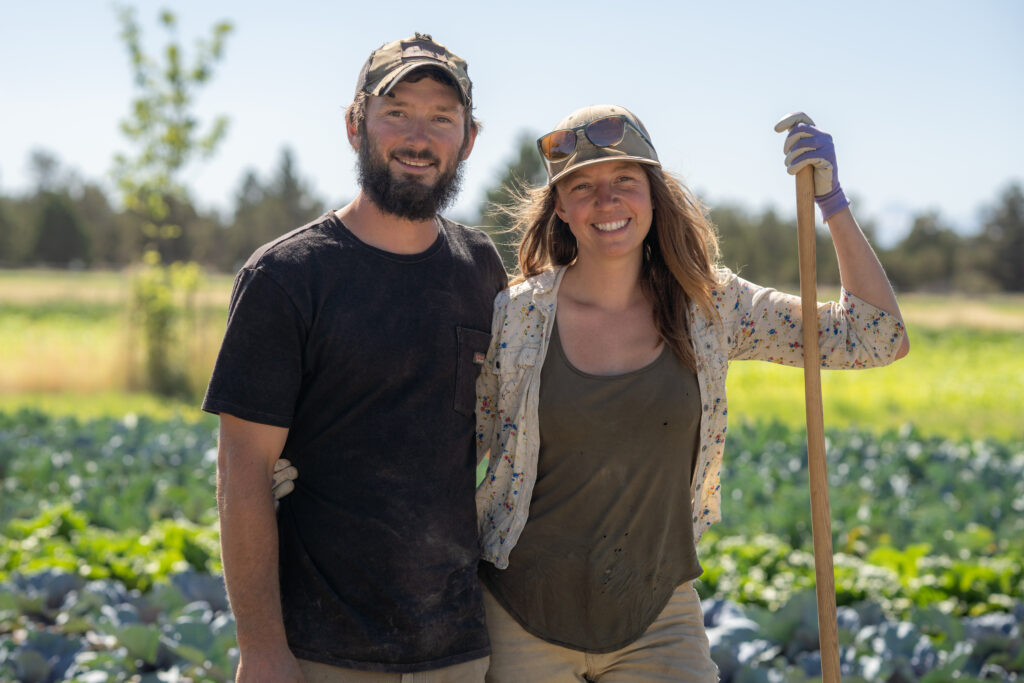
If you’ve ever met Megan Kellner-Rode, you know she embodies the kind of warmth, generosity, and authenticity that makes people instantly feel at home. We’re lucky to have this passionate farmer, educator, and community builder here in Central Oregon. As the co-founder of Boundless Farmstead and the driving force behind Central Oregon’s beloved Fill Your Pantry event, Megan is helping shape a more resilient local food system while inspiring others to reconnect with the land. We loved chatting with her about farmsteading, sustainable agriculture, self-care during the busiest season of the year, and how Functional Medicine has supported her own health journey.
IHM: Hi Megan! We know we’re catching you as your busy farm season is swinging into full gear, so thank you for making the time to chat with us! Can you tell us about your journey to starting Boundless Farmstead?
MKR: I think I have always been a slightly feral child trying to fit into “normal” life. I spent my young life in a town of 500 people, a double wide mobile home on 3 acres between large agricultural properties. We moved back to Bend when I was in 6th grade, and my adolescence was spent fishing, hunting, and wandering the (then) quiet streets of Bend all summer. In my senior year of high school, I would bike to yoga in the mornings before school (even though I had a car and biking seemed “uncool”) and then go to class to write “green” marketing plans for environmentally-sustainable businesses. I have been immersed and thinking about nature for much of my life.
When I entered college, I thought I would go for something sensible, like Journalism. I had (and have) a deep passion for writing, and Journalism seemed like the only way I could write and be paid consistently. Little did I know that all of my research papers and theses would be about the food system. I learned too much too fast about how broken and sick our food system was. I went vegetarian for a year because of the atrocities of Concentrated Animal Feed Operations and began volunteering at the college Urban Farm.

I quickly went back to my rural roots of canning and preserving, growing everywhere I could, gleaning, and taking back control of my food. How many 23 year olds do you know with full cupboards of canned local food, raising meat rabbits, and dumpster diving for pasture raised yogurt at the organic grocery store?
I moved back to Bend in 2024 and tried out the journalism career thing, freelancing for The Source and a couple other small magazines, finding it frustrating and uninspiring. By a small miracle, I got a job at Central Oregon Locavore as Assistant Manager, quickly becoming Manager, and then Assistant Director to the nonprofit. I was working directly with farmers at the business and also volunteering at many farms and ranches on the side. I had a great desire to be a farmer, but it just didn’t feel feasible with land and knowledge acquisition.
Then, in 2016, I met my husband David. He was working at Fields Farm and I was volunteering. We fell in love over hours of weeding beds of carrots together. He was in the process of buying farm land with his parents, and in 2017, we started building the farm together. I feel like the luckiest person in the world to have found the love of my life, who also had the same goals and dreams as I did, and who continues to work towards new shared goals and visions.

IHM: Many people have heard the term “farmsteading,” but may not know exactly what it means. How do you describe it?
MKR: To us, being stewards of the Earth means more than growing vegetables; it means practicing sustainability in all facets of life. Homesteading is about reducing waste, becoming closer to nature, lessening our footprint, and leaving the world a better place than when we entered it. Farmsteading is growing all of our own food or trading with farmers we know and trust. It means reducing waste by minimizing packaging, composting, and thoughtful purchasing, reducing water by using drip and conservation irrigation and pasture management techniques, reducing materials in the landfill by reusing materials from Central Oregon and picking up compost from restaurants. It means planting perennials, improving the soil, and never using chemicals. And most of all it means creating community through food; eating, cooking, and sharing the bounty!
IHM: What does a typical day look like for you this time of year?
MKR: This year, a big focus for my husband David and I has been on incorporating self-care and nourishment into all the tiny spaces of our very full days. Currently, our alarm goes off at 4:45am and the farm crew shows up at 7am. We spend about an hour of our morning stretching/doing light yoga, making a nourishing breakfast for ourselves and our spoiled dogs, and basking in the routine of our morning beverage. The next hour is spent prepping for the work day; changing irrigation, making harvest lists, planning the day.
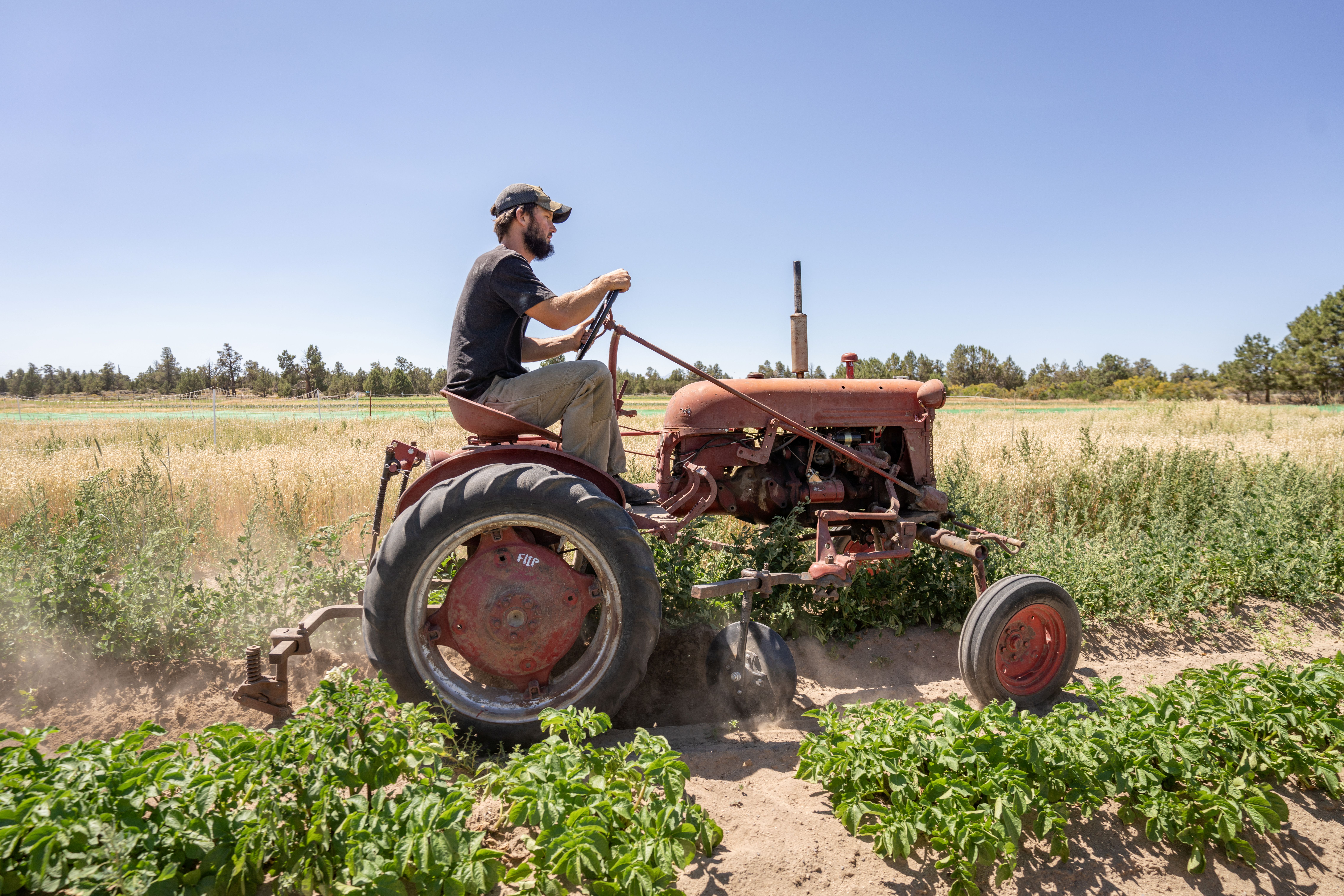
We then work from 7am to 5pm with the crew doing everything imaginable on the farm- weeding, harvesting, tractor work, trellising, pruning, transplanting, seeding, etc. When the crew leaves at 5pm, the day is often not over for David and I. One of us heads inside to start prepping dinner, while the other finishes up the day’s work. We then eat, check-in, take a few moments of down time, and we either head back out to protect the farm from cold/frost by covering plants and closing greenhouses or hop on the computer to get some backend work done. By the time we are back in, the sun is heading below the horizon.
I take about 30 minutes each evening to journal, plan my next day, and meditate. Thanks to Dr. Dishman, I have incorporated moments of self-care into my routine- good nourishing food has always been non-negotiable, so good meals are always present. I fall asleep many nights with a castor oil pack and heat pad. I find moments of peace and remind my nervous system that I am safe and well through guided breathing and somatic techniques. I have an alarm that goes off every two hours to remind myself and our farm crew to stretch, hydrate, and check in with our bodies. In our line of work, keeping our minds and bodies well is crucial to the farm’s sustainability.

IHM: Could you tell us about your growing practices/ethos?
MKR: The short answer is- we grow everything using organic practices, but we are not certified organic.
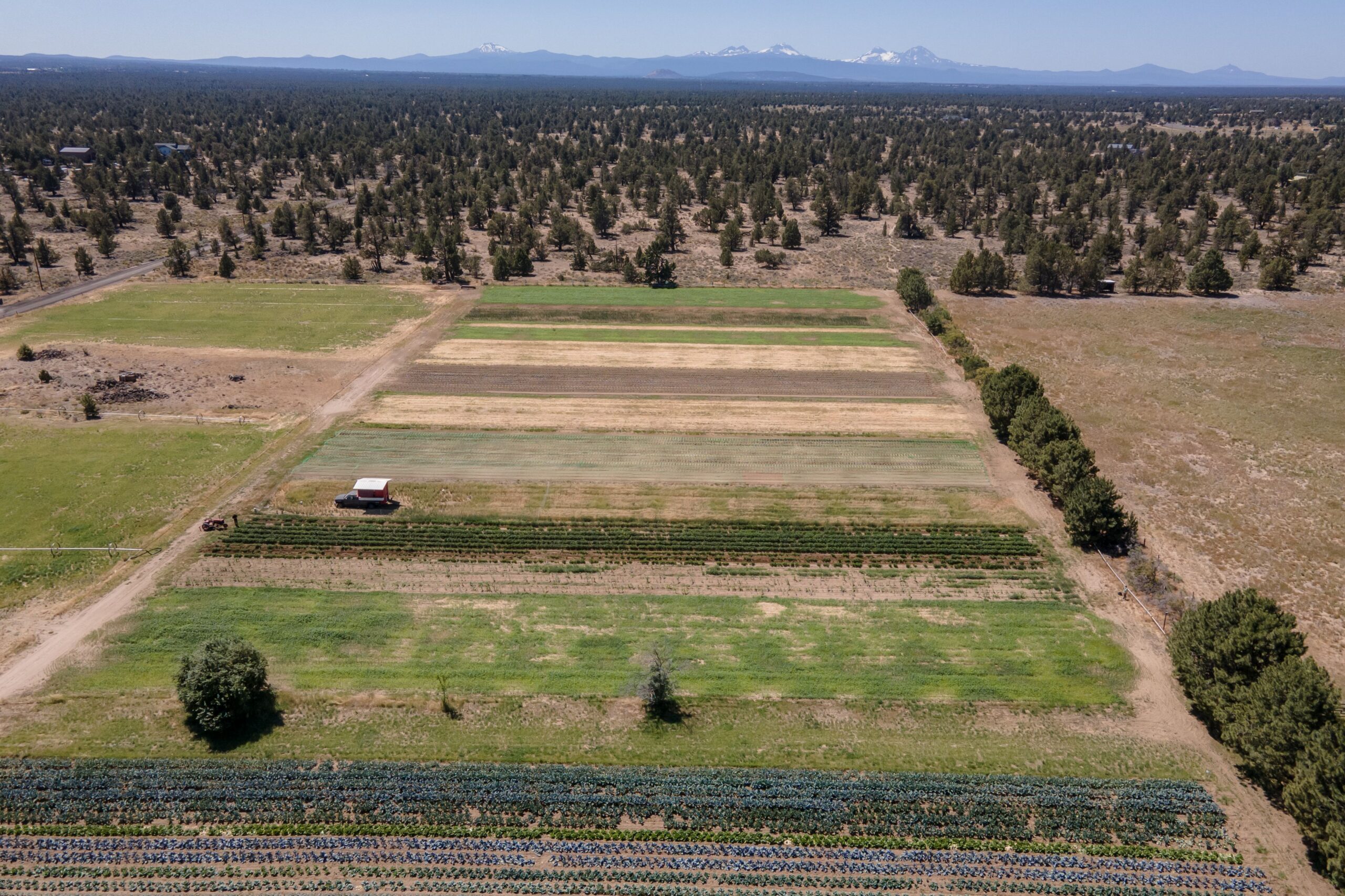
The long answer is- we do everything we can to work WITH nature not against nature. We are farming a very challenging piece of land, once covered in sagebrush and junipers, with very low organic matter. So, we focus very very heavily on building soil organic matter to increase water and nutrient holding capacity, be a favorable place for micro and macro organisms, help with wind erosion, etc. We do this by doing a ton of cover cropping, growing a diversity of crops that we rotate each year, using ZERO chemicals on our farm, etc.
In 2022, I wrote this blog post as a Deep Dive into our growing practices, if you are interested in learning more.
IHM: Our community might not know that you are the founder/organizer behind Central Oregon’s Fill Your Pantry, and you celebrated 10 years last year! For our readers that don’t know about FYP, can you tell us about it and what motivated you to start it?
MKR: Fill Your Pantry is basically a bulk-buying farmers market, happening once a year after the harvest season, but before it gets too bitterly cold. The intention is for eaters to “Fill their pantries” and their freezers, cupboards, garages, etc with local food for the winter. Lots of folks call it the “stock up” event. This greatly helps farmers sell all their food early before having to worry about figuring out the logistics of storing large quantities all winter. Now, as a farmer, I know storage is definitely the most hindering factor of producing a lot of storage vegetables.
Fill Your Pantry is not my original idea. The first FYP began in Corvallis about 15 years ago, and quickly was adopted by Eugene, Hood River, and Portland as well. Each FYP has the same basic mission, while being owned and operated by different businesses/groups/nonprofits.
I grew up in Central Oregon (go PBMS Giants and BHS Lava Bears!) and moved away to Eugene for college, plus a few more years. While in Eugene, I attended a FYP and was so heartened by the wholesome energy, by the turnout, and by the abundance.
When I moved back in Bend in 2014, I realized how challenging it was to access local food. At that time, there were very few CSAs, the downtown farmers market was the only game in town, and Locavore was in its infancy. I knew I needed to bring FYP to Central Oregon.
In 2016, I started the first FYP with 12 vendors in a tony Grange off of Old Bend Redmond Highway. We collectively made around $12,000. Fast forward to 2026, we now cannot fit in any building in Central Oregon. We had 38 vendors and made a collective $307,000! I am so grateful for this community for truly “getting it”, supporting local agricultural, and being excited about local food.
IHM: Could you tell us about your journey with Functional Medicine?
MKR: Before contacting Dr.Dishman, I was feeling a bit disenchanted with all medicine; I hadn’t felt heard or of value in Western Medicine and hadn’t felt like I was seeing any results with Naturopathic Medicine. Being an organic farmer, I believe in investigating root causes, healing things naturally, and only using more intense measures when necessary. I wanted to treat my biometrics like my soul’s. I heard from two other farmers friends about their great experience with Dr.Dishman and decided to give it a shot.
I love her approach to both science, spirituality, and nature. She reminds me of a healer version of Robin Wall-Kimmerer, and that speaks to my approach to life. So, we test, we use herbs, we use imaging, and we discuss a lot.
I came to Dr. Dishman with the complaint of very painful menstrual cramps. We discovered a few potential underlying issues and I have been diligently working on those things. Already, after about six months, I am feeling improvements in my pain levels, in my anxiety, and in my overall well-being.
I feel hopeful now and not hopeless like I was feeling.

IHM: Are there any music, books, podcasts or shows that have inspired you lately?
MKR: I am obsessed with books and am a voracious consumer (mostly audio in the farm season and reading in the winter). I think I am on book 20 for the year so far. I love books about psychology, the body, spirituality, memoirs, real nitty gritty stuff, no fluff.
I really enjoyed Jennifer Wallace’s Mattering and also Never Enough. Both made me feel so much compassion for the human experience. Together by Vivek Murthy was very inspiring. All of these books really drive home the importance of community.
IHM: Which of our 8 Pillars of Inspired Health are you personally giving extra attention to these days?
MKR: Maybe subconsciously, David and I built our lives around many of the 8 Pillars of Health. We are in no shortage of sunshine and nature, and our lives revolve around food and nutrition. We both worship sleep and movement. Our life’s work of growing an organic farm aligns with our ethos of a non-toxic home. We have spent the years since Covid really focusing on building our personal community and strengthening our great community. The two areas that we may have had a lack of are Breath Practice and Creativity & Play.
I have been loving my 10 to 15 minutes of guided breath work each evening. It feels like a moment that is solely mine. As someone who once suffered from anxiety, changes to the business, counseling, community, and breath work have brought so much ease to my life.
Creativity & Play will always be my life’s work. I am a very disciplined person, to a fault sometimes, and find prioritizing work and responsibilities over fun very natural. I have been working to sit in the “discomfort” of not doing work at every opportunity, and scheduling time to do things that I love. I recently have been trying different forms of art with no judgement on how “good” I am- collage, water colors, gelli printing, fiber arts, etc. It has been freeing to try something with no end goal.

IHM: And as usual, let’s share some Central Oregon love! Can you share a couple of your favorite local businesses?
MKR: We have some pretty incredible local businesses in town! Since food is my world, I have to start with Mill Fire Baking. Hands down best bread (and best quality) in town. Herbalism is a huge passion of mine and The People’s Apothecary is such a great business with the sweetest employees and the best store curation. For clothing, Howl Goods. And non profits everyone should join- Central Oregon Landwatch, Central Oregon Locavore, High Desert Food and Farm Alliance, and The Open Art Center (and so many more!).
Thank you Megan!
To learn more about Boundless Farmstead, visit their website and give them a follow on Instagram @boundlessfarmstead. You can catch Megan and the team every Wednesday from 11am-3pm at the downtown Bend Farmers Market in the Mirror Pond Plaza across from The Commons Cafe.