
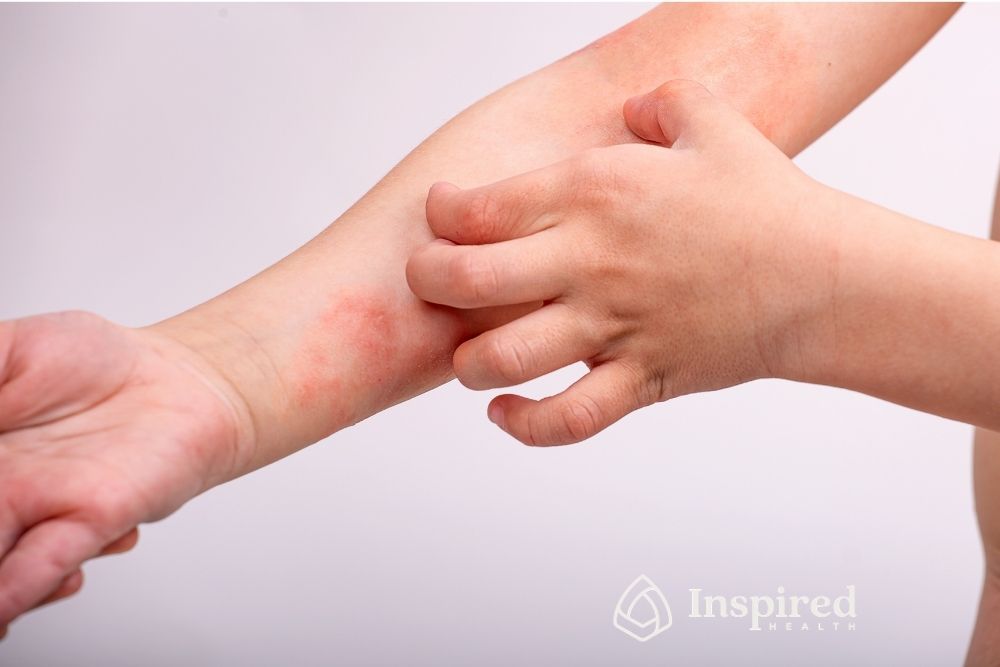
Eczema in children is often treated as a surface-level skin condition, but in many cases, it reflects something deeper. Topical therapies are the mainstay of conventional treatment, and while they can help manage symptoms, they don’t always address the underlying drivers. Eczema is actually less about the skin than you may think, and more about how the immune system interacts with the environment – and much of that interaction is shaped within the gut.
In early life especially, the gut plays a central role in immune education. A child’s microbiome helps “train” the immune system to tolerate harmless exposures while appropriately responding to true threats. When that system is balanced, inflammation is regulated. When it’s disrupted, the immune system can become more reactive, often expressing itself through the skin as eczema.
The Microbiome’s Role in the Immune System
A child’s gut microbiome is the collection of bacteria, fungi, and other microbes living in their digestive tract. These microbes play a huge role in immune system development,70% of which resides in the gut. When that ecosystem is balanced, it helps regulate inflammation and keeps the immune system appropriately “calm.” But when the microbiome is disrupted (what we call dysbiosis), the immune system can become more reactive. This can show up as food sensitivities, inflammation, and, in many cases, eczema.
In infants and young children, the microbiome is still developing, which makes it especially sensitive to things like:
- Antibiotic exposure (during pregnancy, birth, or early life)
- C-section birth
- Limited microbial exposure (very clean environments)
- Formula feeding vs. breastfeeding
- Early or frequent illness
These factors can shift the balance of gut bacteria in a way that promotes inflammation rather than tolerance.

The Gut Skin Connection
There are a few key mechanisms at play in the gut that contribute to eczema. An imbalanced microbiome can increase intestinal permeability (sometimes referred to as “leaky gut”). This allows partially digested food proteins and other particles to cross into the bloodstream, where the immune system may tag them as threats.
Additionally, certain gut bacteria produce compounds that either promote or reduce inflammation. When beneficial bacteria are low, inflammatory signals can dominate. This inflammation can prompt the gut to directly communicates with the skin through immune pathways. Causing the inflammation in the gut to be reflected by the skin.
For many children, eczema flares are closely tied to what’s happening in their gut, even if it’s not immediately obvious.
Clues a Child’s Eczema May Be Gut-Related
Not every case of eczema is rooted in the gut, but there are some patterns that raise suspicion:
- If a child has frequent digestive symptoms like gas, bloating, constipation, diarrhea, or reflux, that’s an important clue.
- A history of multiple food sensitivities or reactions (even mild ones like fussiness, loose stools, or skin flares) can also point toward a gut-immune connection.
- Eczema that is persistent, difficult to manage, or flares unpredictably despite good topical care often has a deeper driver.
- Frequent antibiotic use, chronic congestion, recurrent ear infections, or a generally sensitive/reactive system.
And sometimes, it’s more subtle! Like a baby who seems uncomfortable after feeding, or a toddler with inconsistent stools and ongoing skin irritation.
Where Functional GI Testing Can Help
When eczema is stubborn or paired with other symptoms, functional stool testing can offer a deeper look at what’s happening inside the gut.
These tests don’t just look for infection, they evaluate several other Gut markers including:
- The balance of beneficial vs. opportunistic bacteria
- Presence of yeast or parasites
- Markers of inflammation
- Digestive function (how well your child is breaking down food)
- Immune activity within the gut
This kind of information can be incredibly helpful in identifying root contributors that aren’t visible from the outside. For example, a child might have low levels of beneficial bacteria needed to regulate inflammation, or an overgrowth of certain microbes that are driving immune activation. In other cases, poor digestion or low enzyme activity may be contributing to food reactivity.
Instead of guessing or broadly treating, testing allows for a more targeted, strategic approach. At Inspired Health, we utilize a variety of advanced stool testing methods, including PCR and metagenomic sequencing and choose the most appropriate option based on a child’s specific symptoms and clinical presentation. This allows us to gather more precise, meaningful data and tailor treatment in a way that is both targeted and supportive of long-term gut and immune balance.
What This Means for Treatment
When we address eczema from a gut-focused perspective, the goal isn’t just to suppress symptoms, it’s to support the body in becoming less reactive over time.
This process includes supporting microbial balance (often with targeted probiotics or antimicrobials when appropriate), improving digestion and nutrient absorption, reducing inflammation in the gut and carefully identifying and reintroducing foods as tolerance improves.
It’s important to note that this approach is not about putting a child on an overly restrictive diet or intensive supplement regimen. It’s about understanding why their system is reacting and helping it become more resilient.
A More Root-Cause Way to Think About Eczema
Eczema can be complex, and there’s rarely a single cause. But for many children, the gut plays a significant role and when we support gut health, we often see meaningful improvements in skin. If your child’s eczema feels persistent, confusing, or only partially responsive to conventional care, it may be worth looking a little deeper!

FloraBoost is a probiotic formula for children, designed to deliver live bacteria that promote healthy gut flora, protect intestinal integrity and boost immune function. The formula includes three strains of Lactobacillus and three strains of Bifidobacteria, as well as Streptococcus thermophilus and Saccharomyces boulardii, an extensively researched microorganism shown to help restore microflora balance by enhancing “resident” probiotics.
Ther-Biotic Infant Formula is a high-potency, hypoallergenic blend of 5 Lactobacillus species and 5 Bifidobacterium species is designed to safely meet the metabolic and intestinal support needs of infants up to the age of 2 years. All Lactobacillus species in Ther-Biotic Infant Formula produce predominantly L(+)-lactic acid that can be safely metabolized by infants.

Want more Inspired tips?
Be sure to follow us on Instagram, Facebook, and Pinterest.
Also, sign up for our newsletter!
Visit us in-person at Inspired Health, or schedule a TeleHealth appointment!
References
Fan X, Zang T, Dai J, Wu N, Hope C, Bai J, Liu Y. The associations of maternal and children’s gut microbiota with the development of atopic dermatitis for children aged 2 years. Front Immunol. 2022 Nov 17;13:1038876. PMID: 36466879; PMCID: PMC9714546.
Hou B, Shao H, Yuan D, Tham EH. Skin and gut microbiome in atopic dermatitis: Mechanisms and therapeutic opportunities. Pediatr Allergy Immunol. 2025 Dec;36(12):e70265. PMID: 41388767; PMCID: PMC12701371.
Sadowsky RL, Sulejmani P, Lio PA. Atopic Dermatitis: Beyond the Skin and Into the Gut. J Clin Med. 2023 Aug 25;12(17):5534. PMID: 37685600; PMCID: PMC10487925.